Home Coconut Rhinoceros Beetle
Coconut Rhinoceros Beetle: A Guide for Oahu Homeowners
An invasive beetle is killing coconut and other palms on Oahu. Here is what it is, the signs to look for in your own palms, and what to do if you see them.
Think you have seen it? Report it to the state. The state's coconut rhinoceros beetle program is at crbhawaii.org, and the statewide pest hotline is 643-PEST. This page is general information for homeowners. It is not a diagnosis, and we do not offer treatment.
What the Coconut Rhinoceros Beetle Is
The coconut rhinoceros beetle, usually shortened to CRB, is an invasive beetle that is killing coconut palms and other palms on Oahu. It is a large, dark beetle, and the adults are the ones that do the damage you can see. They fly up into the crown of a palm, bore down into the soft heart where new fronds are forming, and feed there.
Because the damage happens deep in the crown, it is hidden at first. By the time a homeowner on the ground notices something is wrong, the beetle may have been feeding for a while. That is why knowing the signs, and getting a close look at the crown during trimming, matters so much.
Which Palms Are at Risk
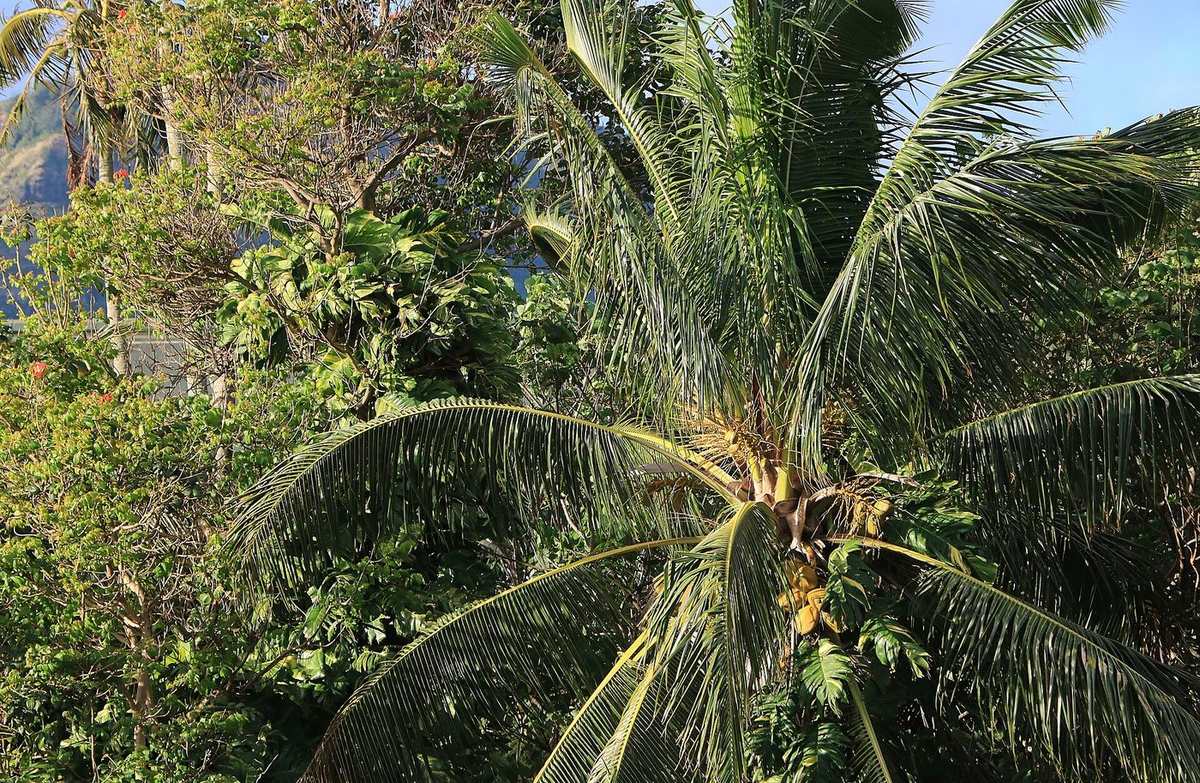
Coconut palms are the beetle's main target in Hawaii, and they are also the palm Oahu homeowners have the most of. Other palms can be attacked too. If you have coconut, royal, date, fan or Bismarck palms in your yard, it is worth knowing what CRB damage looks like.
The Signs to Look For
V shaped cuts in the fronds
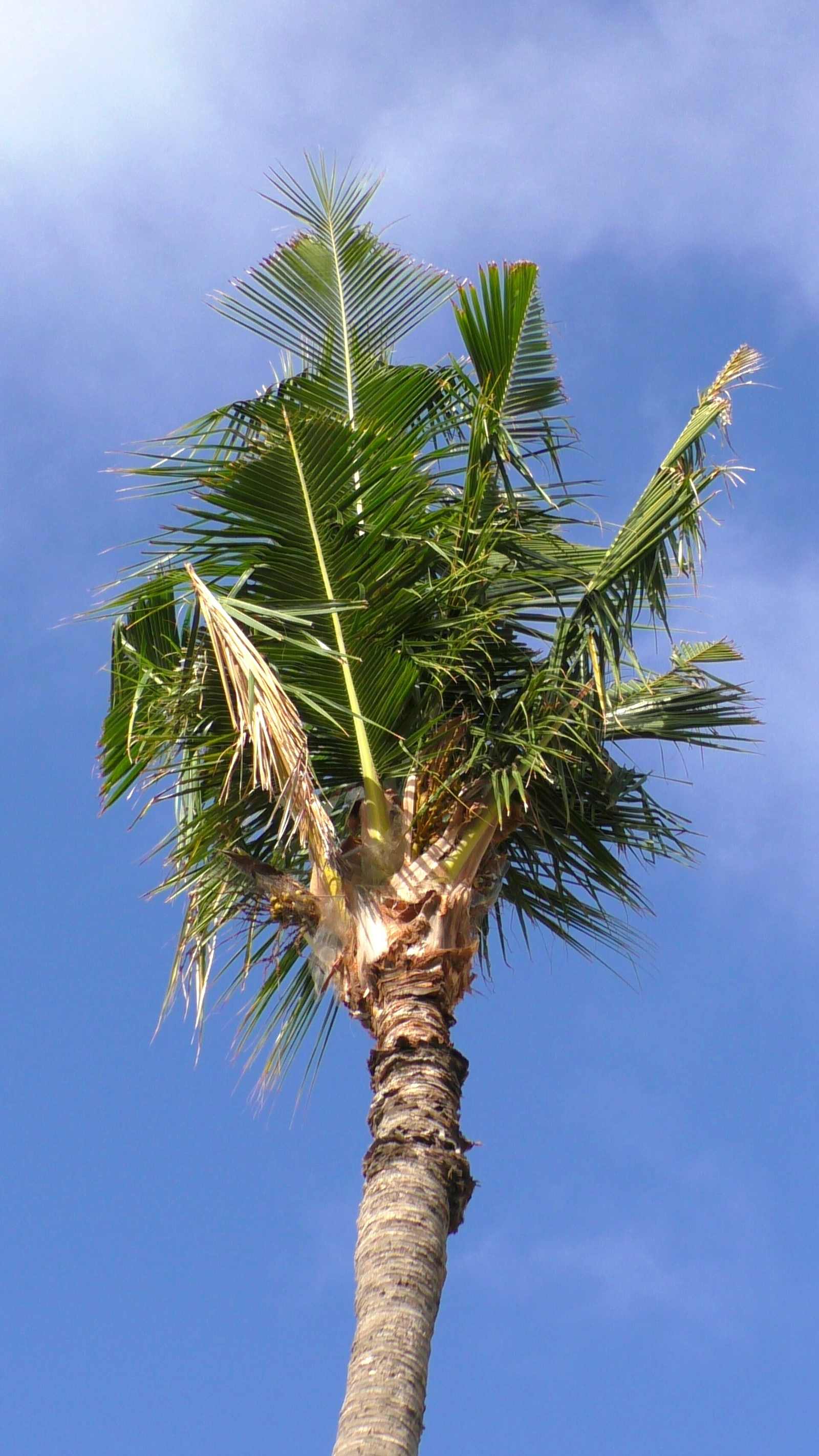
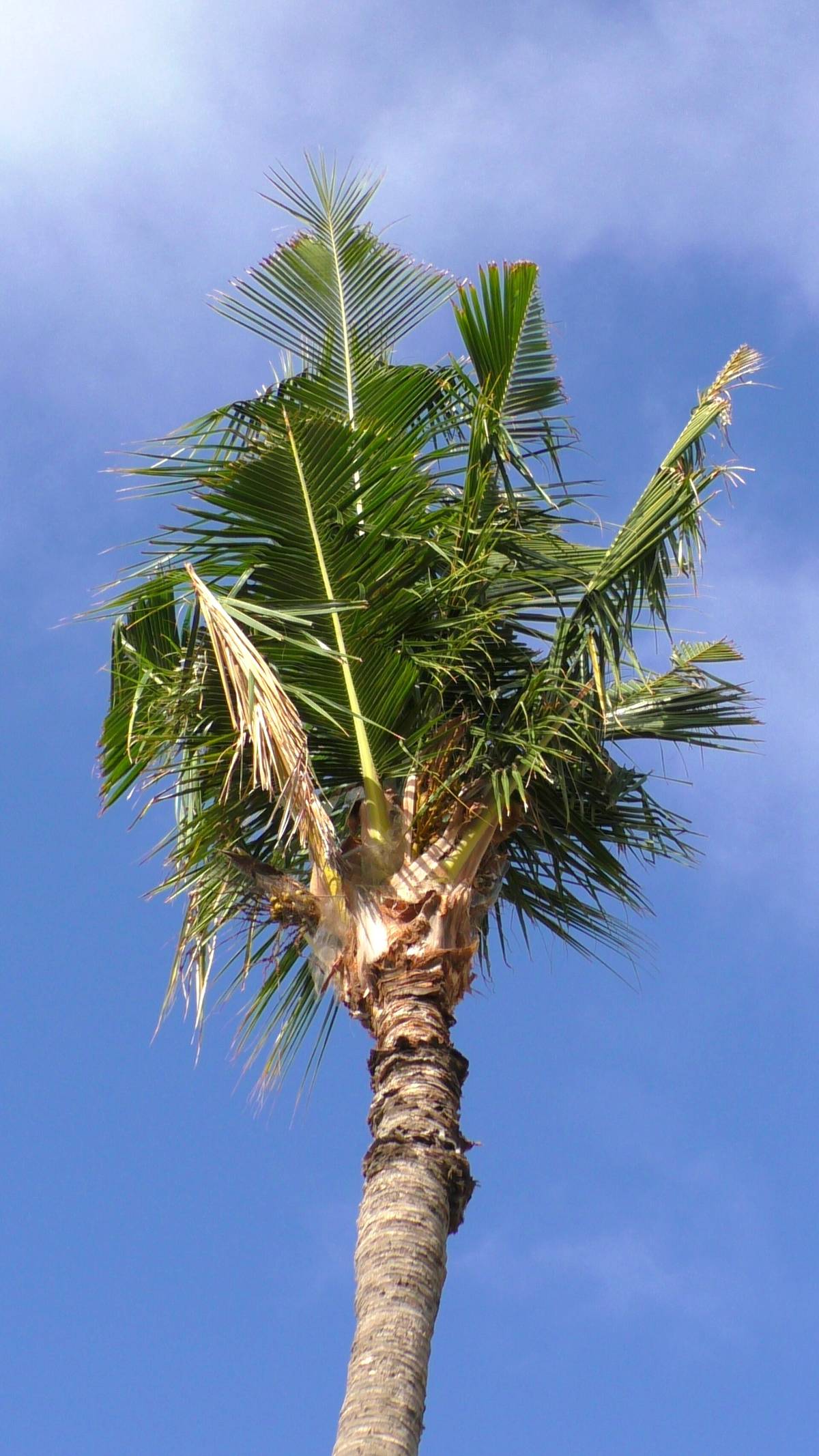
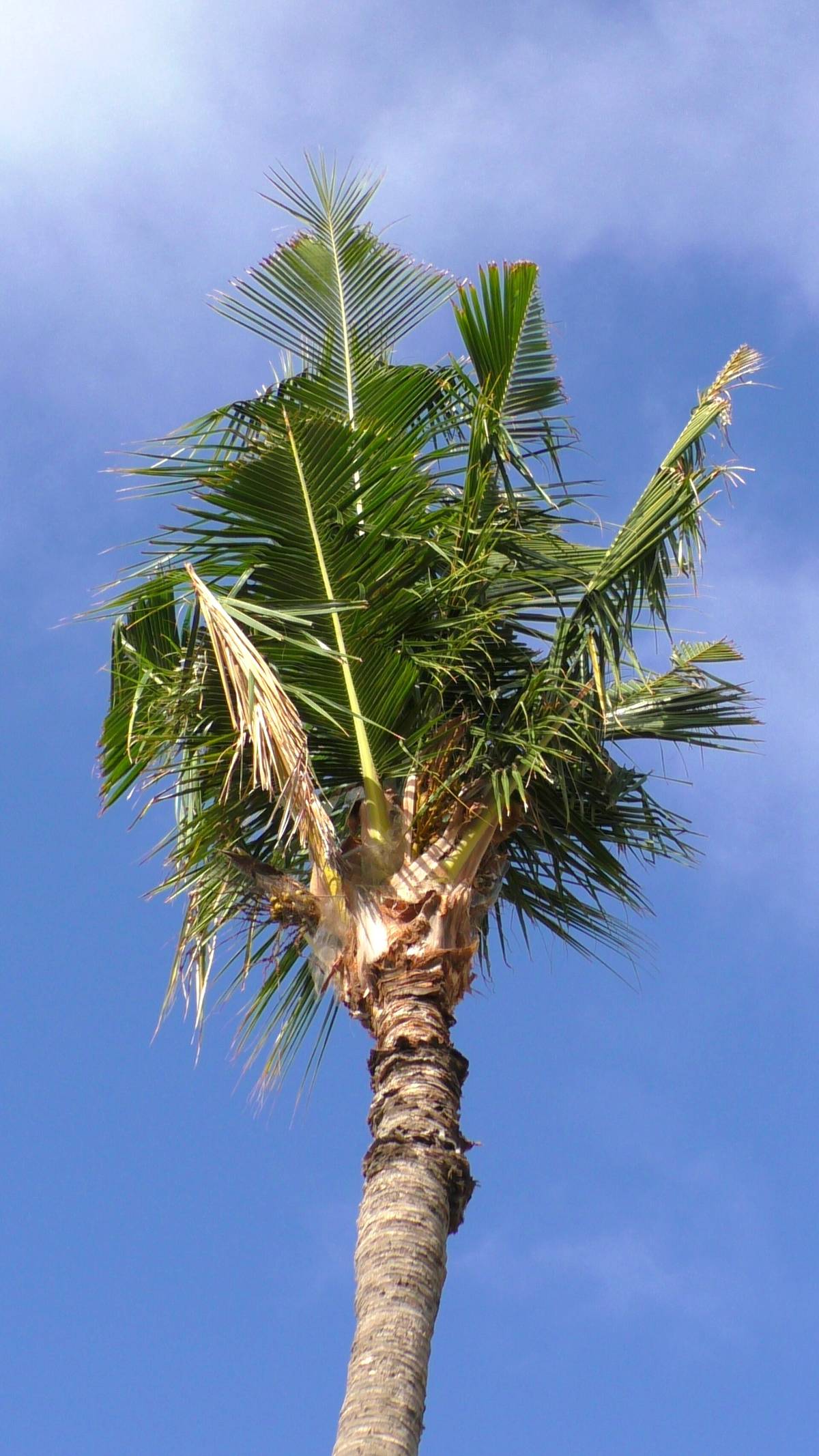
This is the classic sign. When the beetle bores through the folded, developing fronds in the heart of the palm, it cuts through several layers at once. As the frond grows out and opens, those cuts show up as clean, V shaped notches along the frond, often in a repeating pattern. From the ground, a palm with this damage can look as if someone has trimmed wedges out of its fronds.
Bore holes in the crown
Holes in the crown, where the beetle has tunneled in at the base of the fronds, are a direct sign of attack. These are usually only visible up close, which is one reason a trimmer's eyes on the crown are so valuable.
Crown damage
As damage builds, the crown can look ragged, thin or lopsided, with fewer healthy new fronds coming through. In severe cases, the growing point in the center of the crown is damaged, and the palm can die.
Why Catching It Early Matters
A palm grows from a single bud at the top of its trunk. Unlike a broadleaf tree, it cannot grow a new top if that bud is destroyed. So damage to the heart of a palm is serious in a way that damage to a branch on a monkeypod is not.
Early reporting matters beyond your own yard too. The beetle is an invasive species, and the state tracks where it is found. Each report helps the state understand where the beetle is active on the island. Seeing V shaped cuts in your coconut palm and reporting it is a useful thing to do for your neighborhood, not just your own trees.
What to Do If You See the Signs
- Take photosPhotograph the damaged fronds and the crown from the ground, with a zoom if you have one.
- Note the locationWrite down your address and which palms are affected.
- Report itUse crbhawaii.org or call 643-PEST.
- Follow state guidanceAsk the program what they recommend for your palms and your green waste.
Do not move palm fronds, mulch or green waste from a palm you suspect is affected to another property until you have checked what the state advises.
What to Ask Any Crew Trimming Your Palms
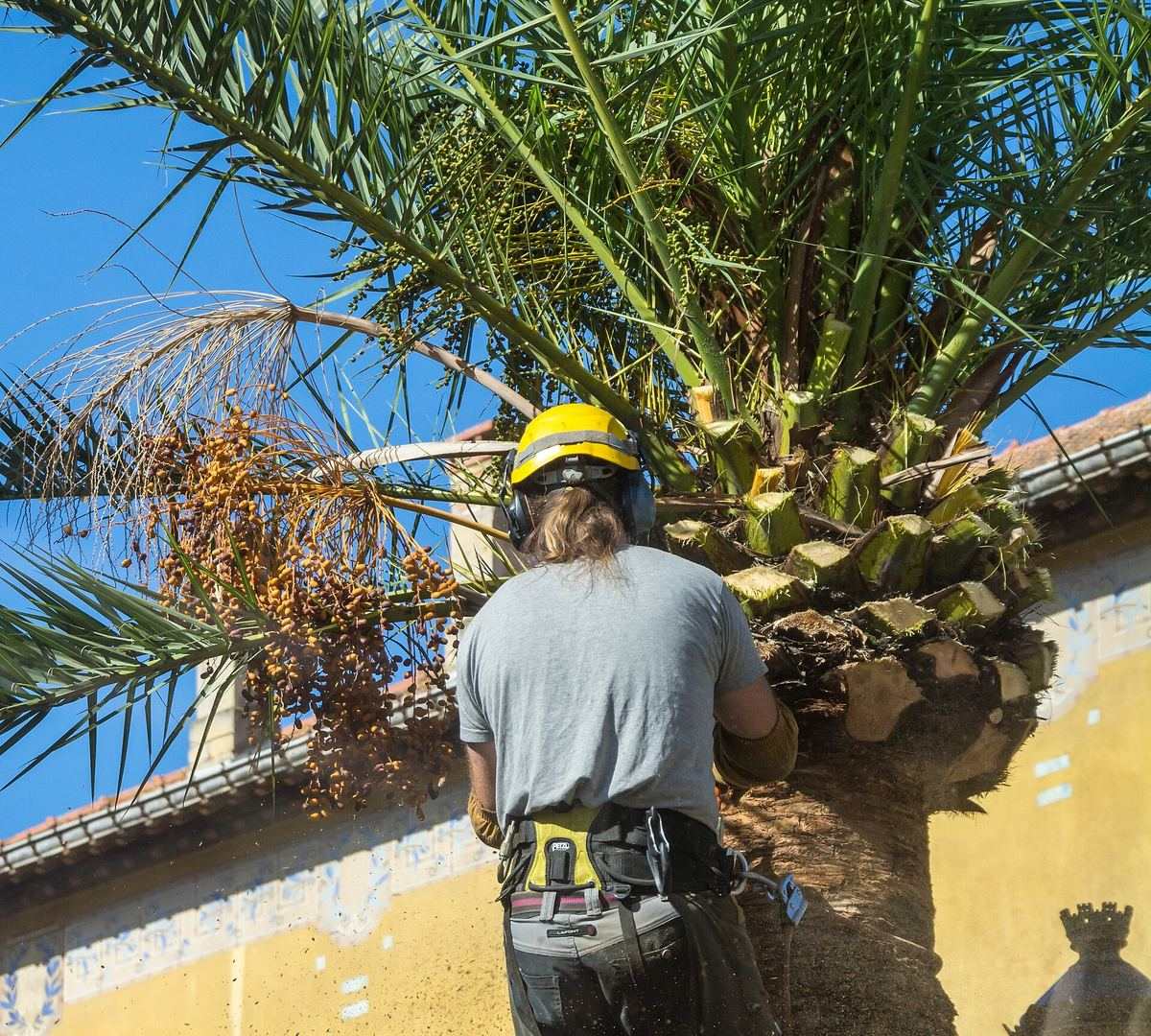
The person trimming your palm is often the only person who gets a close look at its crown. Whoever you hire, these questions are fair to ask:
- Will you look at the crown and tell me what you see? Ask them to watch for V shaped cuts, bore holes and crown damage while they are up there.
- Will you take photos if you see signs of the beetle? Close photos of the crown are far more useful for a report than anything you can see from the ground.
- How will you handle and dispose of my green waste? Fronds and palm debris should be handled the way the state's program advises, not left in a pile or dumped elsewhere.
- Do you climb without spikes on palms that are staying? Spike wounds stay in a palm trunk for life. A stressed palm does not need extra damage.
- If the palm is past saving, what do you recommend? A palm with a destroyed crown will not recover, and a dead palm becomes a hazard. An honest crew will tell you when removal is the right answer.
What This Page Does Not Do
We are not the state program, and nothing here is a diagnosis or a treatment plan. We do not offer inspections or treatments for the beetle. For the current, official picture of where the beetle is and what the state recommends, go to crbhawaii.org or call 643-PEST.
For palm care, see palm tree trimming. For palms that need to come out, see palm tree removal and the palm removal cost guide. Questions about your palms? Call (808) 784-7359.